Sunday, 16 December 2012

Who am I ?

Philosophy has a very small role in medical practice.I would be writing in my speaking tree (spiritual site) blog if I had to share the soul search in my midlife!

 Sharing my expereinces at a working women's meet organised in Bangalore !
In this blog, I want to describe my role as an ENT doctor & what I specialise in.
 
ENT is a diverse speciality that continues to grow & expand.

ENT is considered a surgical speciality.However let me bring to your notice that an ENT Surgeon does a lot of general medical practice as well.Its not all surgery.
Statistics say around 30% of general medical visits & about 40% of pediatrician visits are with ENT issues like sore throats,allergies,sinusitis etc.
 
ENT's play a role in multi disciplinary teams like assessments of headaches,vertigo,tinnitus,rheumatological disorders,snoring & sleep apnoea, special needs children.....the list is exhaustive.

During the post graduate training we systematically acquire the knowledge of all  & an ENT can assess & diagnose all of below.When it comes to clinical practice,we specialise in our areas of interest or what we are best at!

Following are the areas an ENT can specialise.

1.Otology which includes ear diseases,deafness & Neuro otology & Audiology

2.Rhinology which includes paranasal sinuses & advanced nasal endoscopic work like pituitary & orbit

3.Laryngology which includes phonosurgery,airway & swallowing disorders

4.Pediatric Otolaryngology

5.Head & Neck surgery includes benign & malignant tumors

6.Facial plastic & reconstructive surgery

Still more interested groups work on Preventive ENT & Geriatric ENT.

My special interests are

  • Otology including surgeries for  deafness & Cochlear Implants
  • Endoscopic Sinus Surgery
  • Pediatric ENT
  • Swallowing & Speech disorders

I have been successfully running opd based diagnostics for children with airway problems.Our swallowing assessments in opd (FEEST) are not only popular with neurologists but also with patients & their families.
The surgical work where I would like to concentrate will be ear surgeries & deafness.The endoscopic work which i do includes sinus surgeries & with neurosurgeons approach to pituitary & orbit.

The ever evolving medical practice needs updating & constant learning !The learning never stops.

Here as soon as you achieve a goal... new technique comes & a new goal is automatically set up for you.This is different from philosophy ....I can never say I have achieved all & have to keep updating.
The sky's the limit.......or may be even further,as I read somewhere ....


Merry Christmas & a very Happy New Year 2013...think ahead!
 

Wednesday, 7 November 2012

Post Cochlear Implantation speech development: Realistic expectations,however it does not stop at merely repeating some phrases either!

A child with hearing loss whether a hearing aid user or a cochlear implantee should be trained for effective communication.
 
 
There is a great variability in the speech recognition performance of cochlear implant patients.  Auditory performance is defined as the ability to discriminate, detect, identify or recognize speech. 
 
Some of the factors that have been found to affect auditory performance are listed below:
 
Duration of deafness: Early presentation & intervention is the key
 The duration of deafness prior to implantation has been found to have a strong  negative effect   on auditory performance. Individuals with shorter duration of auditory deprivation tend to achieve better auditory performance than individuals with longer duration of auditory deprivation.
Age of onset of deafnessThe age of onset of deafness has a major impact on the success of cochlear implants depending on whether the deafness was acquired before (prelingual) or after (postlingual) learning speech and language. It is now well established that children or adults with postlingual deafness perform better than children or adults with prelingual or congenital deafness.
Age at implantation
Prelingually deafened persons who were implanted in adolescence have been found to obtain different levels of auditory performance than those implanted in adulthood. People implanted at an early age seem to perform better than people implanted in adulthood.
Duration of cochlear implant use
Duration of experience with the implant has been found to have a strong positive effect on auditory performance for both adults and children. The speech perception and speech production skills of children continue to improve over a four year period following implantation.
Other factors
There are also factors, such as patient's level of intelligence and communicativeness, which are unrelated to deafness but may also affect auditory performance. Aural rehabilitation, commitment from the cochlear implant patient in terms of time and effort, and support from family, friends and workplace also play an important role.


As we are becoming very strict with cochlear implant candidacy or selection,the other factors listed above play a vital role in speech development.It is therefore important to get the child's psychological evaluation & have a highly motivated mother.
 
As I am getting to know implanted children better with time,I have realised that my job is even harder once the child learns to listen & speaks few words.

Let me explain this by an example.We have a parent presented with this 8 year old post lingual who lost hearing at 6 years of age to meningitis.Eventually she lost speech & when she reached us she had a non intelligible speech.She was offered cochlear implant &  underwent one sided implantation.
Post implantation AVT(Auditory Verbal Therapy )commenced & she started showing good improvement in speech.She started school & mother was given home lessons for continuing therapy.When the child recently visited us, we asked her to narrate a story or tell us about her routine in school.She could not accomplish this task!!

We realised this child needs to bring her communication skills to a 9 year old.However the mother had no complaints!!She was happy that her child who could not speak like other normal children is now doing so.It took lot of effort to make her realise that this was not enough & the aim is to get communication skills age appropriate.

The improvement in speech & communication in an implantee goes on for upto 4 years post implantation.It does not stop at able to express basic needs & learning to listen.These children with hearing impairment can be effective communicators using listening and spoken language.

Children are taught a number of listening & communication skills with therapist,followed by application and practice at home with their parents in everday situations.
 
"Conversational competence involves an effective response to language.It does not involve parroting or merely repeating memorised phrases" - HOPE (Re)Habilitation Resources

Wednesday, 3 October 2012

"I have got sinus!" Information about acute & chronic rhinosinusitis.

Almost everyday I have a patient who comes & says "I have got sinus doctor"

Actually what they mean by that is having nose & sinus related issues or may be a simple headache.I thought to do a simple write up about sinusitis.

What are sinuses?

Sinuses are air filled cavities in our skulls.There are four pairs of sinuses.The maxillary,ethmoid,frontal & sphenoid.The purpose of sinuses is to moisturise the air we breath,keep our head lighter(due to air in them-hence when they are filled with mucus we get heavy headed) & they also enhance our voice.

The sinus cavities include:
• The maxillary sinuses (the largest), in the cheekbones.
• The frontal sinuses, in the low-center of the forehead.
• The ethmoid sinuses, between the eyes, at the nasal bridge.
• The sphenoid sinuses, in bones behind the nasal cavity.

Picture of the Human Sinuses


What is sinusitis or sinus infection?

Sinusitis is inflammation or infection of sinuses which could be allergic,viral or bacterial.

The common symptoms are
  • Increased mucus production,
  • nasal congestion,
  • discomfort in the cheeks, forehead or around the eyes 
  • headaches  .
If the  nasal septum is deviated to far or there are nasal polyps or obstruction of any kind,it will lead to blockage in the free flow of nasal mucus & eventually sinusitis.

How do we diagnose sinusitis?

Diagnosis is usually done clinically by your symptoms & examination of the nose.In the nasal examination, we look for inflammation, mucopus & any obstruction or swellings.There can also be associated facial tenderness over sinuses.

Role of nasoendoscopy in the opd is to add to the information given by patient & is more useful for looking for polyps & other obstruction which cannot be easily picked up by anterior headlight examination.

If your symptoms do not clearly indicate that you have sinusitis or if they persist for a long time and do not get better with treatment, we may order a CT (computerized tomography) scan  to confirm that you have sinusitis.

To look for causes of chronic sinusitis ,we may order blood tests,take a sample of nasal mucopus or order sweat test.

What is the management of sinusitis?
 
  • Acute sinusitis:
      Most of the acute sinusitis resolve with nasal decongestion,treatment of nasal allergy & symptomatic pain treatment.However if the symptoms do not resolve with above -antibiotics are given.
  • Chronic Rhinosinusitis
Chronic rhinosinusitis is often a challenge to treat.

Medical treatment is offered first in the form of
  • Nasal steroid sprays 

  • A long course of antibiotics is occasionally recommended 

  • Saline (saltwater) washes or saline nasal sprays can be helpful in chronic rhinosinusitis because they remove thick secretions and allow the sinuses to drain.

  • Oral steroids, such as prednisone, may be prescribed for severe chronic rhinosinusitis especially if allergy is suspected.

  • Surgical Treatment is offer if medical management fails.
    The goal of surgery is to improve sinus drainage and reduce blockage of the nasal passages. Nasal surgery usually is performed to accomplish the following:
    • Enlarge the natural openings of the sinuses
    • Remove nasal polyps
    • Correct significant structural problems inside the nose and the sinuses if they contribute to sinus obstruction

    Although most people have fewer symptoms and a better quality of life after surgery, problems can reoccur, sometimes even after a short period of time in allergics.

    In children, problems can sometimes be eliminated by removing the adenoids. These gland-like tissues, located high in the throat behind and above the roof of the mouth, can obstruct the nasal passages.
     
    What are the complications of sinusitis?

    Complications are rare. However, they can be serious. For example, infection may spread from a sinus to around an eye, into bones, into the blood, or into the brain.
    These severe complications are estimated to occur in about 1 in 10,000 cases of acute sinusitis. They are more common with infection of the frontal sinus.

    Children are more prone to complications than adults. Swelling or redness of an eyelid or cheek in a child with sinusitis should be reported urgently.
     
     
    How can sinusitis be prevented?

    There are no methods that have been scientifically proven to prevent acute or chronic sinusitis. However following measures can help:

    • Keep your nose as moist as possible with frequent use of saline sprays or washes.
    • Avoid very dry indoor environments and use a humidifier, if necessary. Be aware, however, that a humid environment also may increase the amount of mold, dust mite, or cockroach allergens in your home; this is important only if you are allergic to any of those organisms.
    • Avoid exposure to irritants such as cigarette and cigar smoke or strong odors from chemicals.
    • Avoid exposure to substances to which you are allergic.
    • If you haven’t been tested for allergies and you are getting frequent sinus infections, an allergy evaluation may help.
    • Avoid long periods of swimming in pools treated with chlorine, which can irritate the lining of the nose and sinuses.
    • Avoid water diving, which forces water into the sinuses from the nasal passages.
     

    Wednesday, 29 August 2012

    I hear,speak & communicate....I am trained to do so!

    In today's world-a class on speech & communication skills is nothing unusual.All corporates send their staff on some communication skills program.Politicians from centuries hired speech writers & practiced communication skills.

    Here I write this blog for training & teaching speech & communication skills to hearing & speech delay children.
     
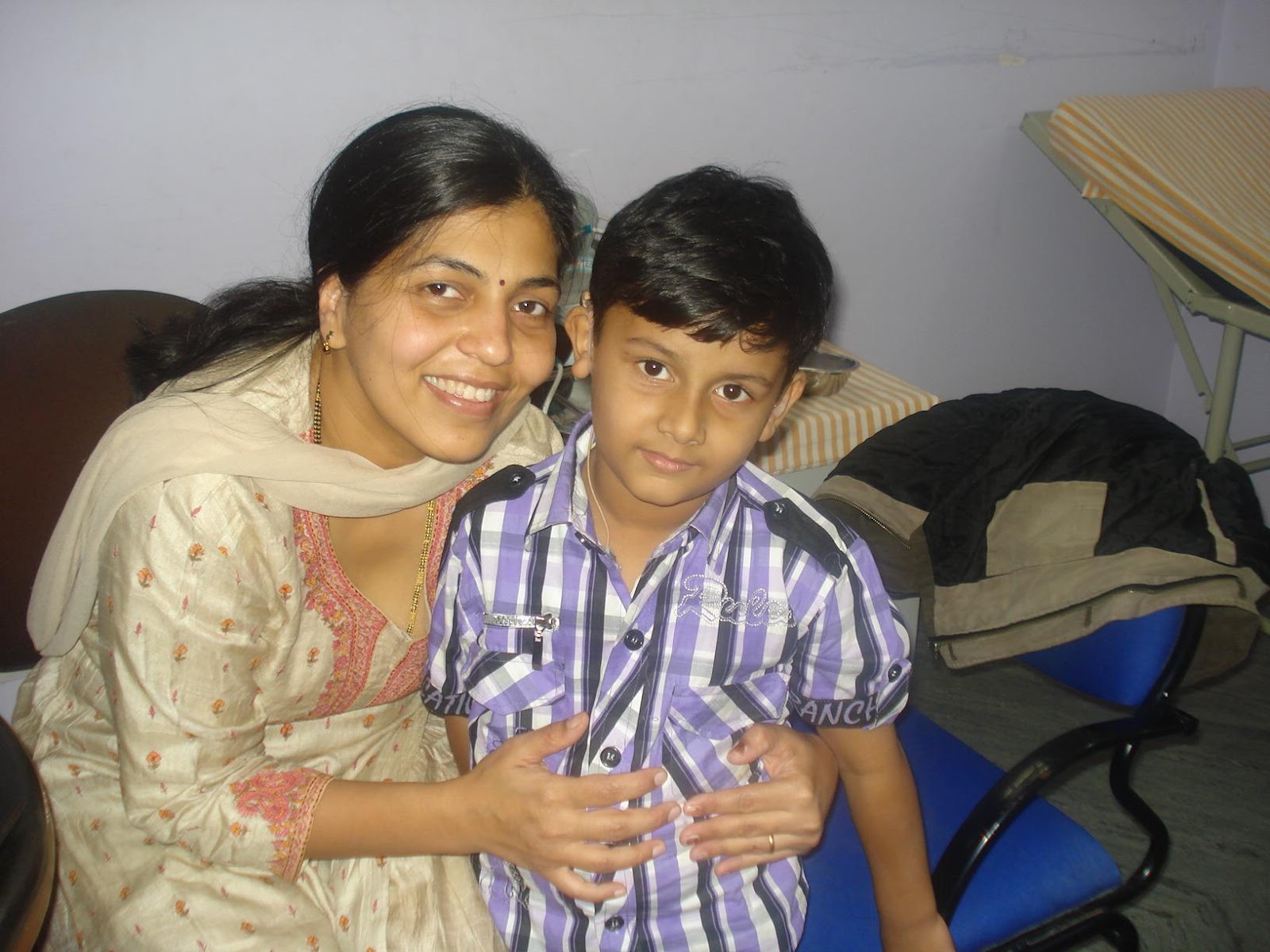
    With Cochlear Implantee-Master Yash who now speaks Hindi & started speaking English as well.He plans to go to English Medium School from coming year!


    Hearing loss especially profound sensorineural deafness is a silent disability.People see a blind child & their heart goes out for them.A hearing disable child most of the times looks normal & does not get so much attention atleast in the initial years of his/her life.Since they cannot hear-they do not develop speech.

    Fortunately this sensory organ has been successfully overcome by a new technology called Cochlear Implants.
    The journey of a cochlear implantee from candidacy to surgery to speech & communication is detailed in the following link of my website.
    http://www.entbangalore.in/cochlear-implant

    Coming back to communication-post implantation the process of learning & benefits of the Auditory Verbal Therapy goes on for upto 4 years.

    The key factors in habilitating a child with profound nerve deafness & speech delay are

    1.Age of detection & early introduction of hearing aids followed with speech therapy.This can be done in a baby as old as 6 months.

    2.If no benefit from hearing aids-councelling for cochlear implant.Maximum speech benefit of cochlear implantation is before 3 years of age in a pre-lingual child.However upto 6 years -implantation has good speech benefit.

    3.Auditory Verbal Therapy & Parental involvement

    4.Appropriate Councelling & expectations-This should be done after thorough work up including pediatrician,ophthalmologists,psychologists,Neurologists&Speech Therapists.

    Sunday, 1 July 2012

    Another day weny by!

    I started writing this blog last year -a day after doctors day 2011.

    Yesterday was again-Doctors Day 2012

    My feelings about celebrating(or shall i say should not be celebrating) this day have not changed much since last year.
    My theme for this year-Communicate(for doctors & patients).I think this is the only solution for the paranoia we have around us.Especially so as a surgeon,i face it more.

    I will just give one example-this summer holidays a child came for adenotonsillectomy.This surgery is advised to her by not only me but a few ENT surgeons since a year.All risks & complications explained many many times by many doctors.We finally decided a date for surgery -however i had to cancel the operation.read the reason....
    A day before admission mother came to my office & had a final query-"I am told by someone -tonsillectomy causes infertility".
    I could cancel the surgery since tonsillectomy is not a life saving surgery.But what do you do when someone has cancer or any life threatening illness......there is so much information available on the internet ..& so much given by others... !.This is confusing patients...sometimes even doctors !


    I am not against celebrations but when being in this profession for so many years did not see any celebrations on 1st july,i wonder what has changed suddenly to salute doctors now!
    Doctors of previous generations should be saluted.There were no Hi tech labs..no MRI's...no PET Scans...no Gamma knife ....& they strived to save lives.THERE WAS EXCELLENT PATIENT DOCTOR RELATIONSHIP.THERE WAS TRUST....THERE WAS NO INTERNET....

    Well my inbox was full of messages & phone kept beeping (annoying) while i had a long day yesterday in the hospital(note it was a sunday).Everyone wished me...all respect to wishes & messages.

    We live such robotic lives & probably have no time to Meet,Hug,Smile,Express.....that we need days to celebrate people around us.
    I have no plans of joining any sena gang....though have the same feelings about Valentines day...express your love to somebody everyday....there is so much excitement in receiving flowers out of the blue than on valentines day alone...

    Go ahead enjoy everyday!!!!

    Monday, 4 June 2012

    Holistic Approach to Medical Care

    There is Medicine & there is Holistic Medicine..........and there is holistic approach to Medical Care


    I so often come across situations where just to the point advise & treatment may not be enough.There is this issue of patients window shopping -its a phenomenon on the rise...A part of it is economic reasons & some of it could be the doctors approach & relationship with the patient.

    Especially when we advise surgery -we should not scare the patients.All possible option should be given.
    If urgent -it should be properly explained.

    For example-1.Adenotonsillectomy which can wait till school holidays
                          2.Safe Ear Drum Perforation Repair which can wait till appropriate off work can be arranged.

    Ofcourse above situations demand precautionary measures like avoiding refrigerated & spicy food in case 1 & preventing water entering ear in case 2.
    There should also a quick wayof getting in touch with your doctor-it could be opd visit or phone or email.
    Lets see where our approach is going....
    I went through web for definitions of each...
    Medicine is the field of applied science and the art of healing...{note the art part of it...does it exist anymore or only scans & tests exists}


    Holistic medicine focuses on how the physical, mental, emotional, and spiritual elements of the body are interconnected to maintain wellness, or holistic health. When one part of the body or mind is not working properly, it is believed to affect the whole person.


    Holistic approaches focus on the whole person rather than just on the illness or part of the body that is not healthy.


    In fact, the World Health Organization (WHO) has defined health since 1948 this way:

    "Health is a state of complete physical, mental and social well-being and not merely the absence of disease or infirmity."


    Clinical holistic medicine actually dates as far back as Hippocrates.An holistic approach to patient care was also suggested by Percival in his book - the first textbook of medical ethics - first published in 1803. Percival stated: "The feeling and emotions of the patients require to be known and to be attended to, no less than the symptoms of their diseases".


    Doctors should no longer see patients as walking pathology . 

    I get blamed to take a lot of time in opd consultations & am told to be quick...I decide which patient needs time spent with & who does not.It may be a simple problem & long consultation & vice versa.It all depends on the patients acceptence & understanding of the problem.
    My approach differs with each person who comes & sits in front of me though the medical assessment & diagnosis may remain the same in all of them.

    Trust real doctors sitting in front of you, not internet....

      On Doctors day 1st July 2022, we can only wish for a healthy life and relationship for both patients and doctor. The first practical class...